
The New Language of Light: Designing with Responsive Illumination

Light does more than reveal the objects within a room. It establishes visual hierarchy, changes the perceived proportions of a space, highlights architectural details, and influences how people experience different activities. Connected lighting introduces a dynamic dimension to this relationship by allowing illumination to respond to time, movement, daylight, and personal preference.

Instead of treating every light fixture as an independent source, modern lighting design can coordinate multiple layers into a flexible environment.

Three Layers of Effective Illumination

Ambient lighting provides general illumination and establishes the overall brightness of a room. Task lighting directs additional light toward activities such as reading, food preparation, or detailed work. Accent lighting emphasizes artwork, shelving, architectural features, or decorative objects.

Smart controls allow these layers to work together. A workspace might use moderate ambient illumination and focused task lighting during the day, then transition to softer settings in the evening. A living room could maintain low-level background lighting while emphasizing selected decorative features.

The objective is not to automate every fixture independently. It is to create combinations that support a room’s purpose.

Circadian Considerations and Visual Comfort

The intensity and spectral characteristics of light can influence alertness and the body’s response to daily light exposure. Adjustable lighting systems allow color temperature and brightness to change over time, potentially supporting a more comfortable visual environment.

However, lighting effects depend on intensity, timing, duration, individual sensitivity, and other environmental conditions. A warm-colored bulb does not automatically improve sleep, and a cool-colored light does not guarantee concentration.

A balanced approach prioritizes appropriate illumination, access to natural daylight, reduced glare, and settings that feel comfortable to the occupants.

Automation Without Visual Disruption

Motion sensors, daylight detectors, and scheduled transitions can make lighting more responsive. Yet poorly configured automation can produce abrupt changes, unnecessary activation, or lights switching off while a person remains still.

Gradual dimming and adjustable timeouts often create a more natural experience. Bedrooms and living areas may benefit from subtle transitions, while stairways and workspaces may require immediate, dependable illumination.

Manual controls should remain intuitive. A familiar wall switch or clearly labeled scene button can be more practical than opening an application for every adjustment.

Technology Behind the Glow

Smart lighting products may use Wi-Fi, Bluetooth, Zigbee, Thread, or proprietary communication methods. Some operate independently, while others require a hub or compatible controller.

Brightness control, color adjustment, synchronization, and remote access may differ across products. Electrical compatibility also matters, particularly when smart bulbs are connected to traditional dimmers or switched circuits.

Before choosing equipment, it is useful to consider fixture dimensions, light output, color-rendering quality, communication requirements, and the availability of replacement products.

A More Deliberate Relationship with Light

Responsive lighting is most successful when it serves architecture rather than competing with it. Carefully placed fixtures, suitable color temperatures, and thoughtfully designed scenes can transform a room without filling it with unnecessary visual effects.

The future of lighting is not simply about making illumination programmable. It is about giving people greater control over how spaces appear and function throughout the day.


Beyond the Listing: Understanding What Makes a Home Right for You

A home can look perfect in photographs and still be the wrong choice for everyday life. Attractive interiors, carefully arranged furniture, and impressive exterior details naturally draw attention, but they reveal only a small part of what makes a property suitable. The real value of a home often becomes clear when buyers consider how they intend to live, what routines matter most, and which features will remain useful over time.

The first step in evaluating a potential home is identifying personal priorities. Some buyers need a quiet environment for remote work, while others value open living areas, outdoor space, or room for a growing household. These preferences should be separated into essential requirements and optional conveniences. A dedicated workspace, for example, may be more important than a decorative fireplace if working from home is part of the daily routine.

It is equally important to consider how the property supports ordinary activities. Where will groceries be stored? Is there enough room for frequently used belongings? Does the layout make it easy to move between the kitchen, living area, and bedrooms? Small inconveniences may seem insignificant during a short viewing, but they can become frustrating when repeated every day.

Buyers should also look beyond their current circumstances. A home that comfortably accommodates today’s needs may become restrictive if work arrangements change, family responsibilities increase, or additional storage becomes necessary. Flexible rooms, adaptable layouts, and practical storage solutions can help a property remain useful through different stages of life.

Emotional appeal deserves attention, too. Feeling comfortable in a space is a legitimate part of the decision. Natural light, privacy, proportions, and the overall atmosphere can influence whether a property feels welcoming. However, emotional attraction should complement careful evaluation rather than replace it.

Comparing several properties against the same set of priorities makes the decision more objective. Instead of relying on the excitement of a single viewing, buyers can identify which home provides the strongest combination of functionality, comfort, condition, and future flexibility.

Ultimately, choosing the right home is not about finding the most impressive listing. It is about finding a property that supports everyday life with fewer compromises. When buyers understand their needs before viewing homes, they can recognize genuine suitability more easily and approach important decisions with greater confidence.

From Empty Rooms to Everyday Living: Seeing the Potential in a Floor Plan

A floor plan can reveal information that photographs cannot. Images may highlight attractive furniture and carefully arranged decorations, but a plan helps buyers understand how rooms connect, how much usable space is available, and whether the layout supports practical daily activities. Learning to read these details can prevent disappointment after moving in.

The first consideration is the relationship between rooms. An open layout may create a sense of spaciousness, while a more divided arrangement can provide privacy and separate areas for different activities. Neither approach is automatically superior. The best option depends on how the household uses its space and whether people need quiet areas for work, rest, or hobbies.

Room dimensions are more useful when considered alongside furniture and movement. A bedroom may appear large enough on paper, but the placement of a bed, wardrobe, and desk could leave little room to move comfortably. Buyers can sketch approximate furniture arrangements to understand whether essential items will fit without obstructing doors, windows, or circulation paths.

Storage deserves more attention than it often receives. Closets, utility cupboards, kitchen cabinets, and dedicated storage areas help prevent frequently used belongings from occupying living spaces. A property with generous floor area but limited storage may feel cluttered, while a smaller home with a thoughtful layout can remain organized and comfortable.

Natural light and ventilation are also influenced by the arrangement of rooms and openings. Window placement, room orientation, neighboring structures, and the depth of interior spaces can affect how daylight reaches different areas. During a viewing, buyers should notice which rooms feel bright, which remain shaded, and whether windows can provide practical ventilation.

The location of utilities can influence renovation possibilities. Kitchens and bathrooms depend on plumbing, drainage, electrical systems, and ventilation. Moving these facilities may be more complicated than changing paint colors or replacing floor finishes. Buyers considering alterations should understand the technical requirements, structural limitations, and any necessary approvals before assuming a redesign will be straightforward.

Flexibility is another useful measure of a floor plan. A spare room that can function as an office, guest room, or hobby space may provide more long-term value than a room designed for only one purpose. Sliding partitions, adaptable furniture, and well-planned storage can also help spaces serve several functions without feeling crowded.

Circulation is easy to overlook when viewing a static plan. Narrow hallways, awkward corners, poorly placed doors, or routes that cut through private areas may affect how the home feels in daily use. Imagining the movement of several people through the space can help reveal potential inconveniences.

Ultimately, floor-plan analysis is about understanding how square footage translates into usable living space. Buyers who examine proportions, connections, storage, lighting, and adaptability can evaluate a property more accurately than those who rely on photographs or total area alone.

When Your Home Starts Thinking in Patterns

A home generates patterns long before anyone attempts to automate them. Lights are switched on at particular times, appliances operate in recurring cycles, and indoor temperatures change according to occupancy and weather. Artificial intelligence offers ways to interpret these patterns and use them to improve the coordination of connected devices.

The interesting development is not simply that household equipment can respond to commands. It is that selected systems can begin identifying relationships between events and anticipating what may be needed next.

From Repetition to Recognition

Traditional automation follows explicit instructions. If a motion sensor detects movement after sunset, a hallway light switches on. If the temperature falls below a selected threshold, a compatible heating system activates.

Pattern-based systems introduce another layer. Software may analyze historical observations to estimate when a room is likely to be occupied or identify recurring changes in energy consumption. Depending on the implementation, it can recommend new schedules or adjust selected settings automatically.

These capabilities differ considerably between products. Some systems use straightforward statistical analysis, while others employ machine-learning models. A marketing description alone does not reveal how sophisticated the underlying technology actually is.

Context Is More Valuable Than Raw Data

Collecting large quantities of information is not the same as understanding a household. A motion sensor may register movement without identifying whether the room is being used for work, relaxation, or cleaning. A temperature reading may change because of sunlight rather than a change in occupancy.

Combining carefully selected measurements can provide more useful context. For example, occupancy information, daylight levels, and existing lighting conditions may help a controller decide whether additional illumination is necessary.

The objective should be to gather enough information to support a specific function, not to monitor every possible aspect of domestic life.

The Problem of Incorrect Assumptions

Intelligent systems can make mistakes when routines change. An automation model trained on weekday activity may perform poorly during a holiday or when household members adopt a different schedule.

This is why manual overrides remain essential. Users should be able to reject recommendations, correct unwanted behavior, and disable automation without navigating complicated settings.

Systems should also communicate uncertainty honestly. A predicted event is not a confirmed event, and an unusual appliance reading is not necessarily evidence of a fault.

Keeping Intelligence Close to Home

Some AI functions can operate on a local controller, while others depend on external servers. Local processing may reduce latency and limit the amount of household data transmitted outside the home, although hardware requirements and capabilities vary.

Privacy-conscious design includes reviewing data retention, restricting permissions, and understanding whether recordings or activity histories are used by external services.

The Human Standard for Intelligent Design

The most convincing smart home is not one that constantly demonstrates its intelligence. It is one that makes sensible adjustments, explains important decisions, and remains easy to control.

Artificial intelligence can improve convenience when its predictions are useful and its limitations are acknowledged. The real measure of progress is not how much a home can infer, but how effectively it turns limited, relevant information into dependable assistance.

The Numbers Behind the Front Door: Building a Realistic Home Buying Budget

The purchase price is only one part of the financial commitment involved in buying a home. A property may appear affordable when judged solely by its advertised value, yet the total cost of acquiring, maintaining, and occupying it can be considerably higher. A realistic budget accounts for the entire ownership experience rather than focusing on the initial transaction alone.

The process begins with understanding available funds. Buyers should review their savings, regular income, existing financial obligations, and the amount they can comfortably dedicate to housing. A budget should leave sufficient room for ordinary living expenses and unexpected changes in income. Committing every available resource to a property can create unnecessary pressure after the purchase is complete.

Initial expenses may include a down payment, transaction-related charges, professional services, inspections, document preparation, and moving costs. Depending on the property and the applicable arrangements, additional expenses may arise before the home is ready for occupancy. Buyers benefit from identifying these costs early instead of treating them as last-minute surprises.

Ongoing ownership introduces another layer of financial responsibility. Utilities, routine maintenance, repairs, insurance, shared-building charges, and property-related taxes may all affect the household budget. Some expenses are predictable, while others appear irregularly. A heating system might function perfectly during a viewing but require attention several years later. Roof repairs, plumbing issues, and appliance replacements can also demand significant resources.

A separate maintenance reserve can make these events easier to manage. Rather than assuming every month will have identical expenses, buyers should prepare for periods when the property requires additional spending. The appropriate reserve depends on the building’s age, condition, construction type, and existing systems.

Financing terms also deserve careful attention. Monthly payments should be evaluated alongside interest arrangements, repayment duration, fees, and the possibility of changing payment obligations. Buyers need to understand the complete structure of any proposed financing rather than comparing options by monthly payment alone.

Another useful practice is to test the budget against less favorable circumstances. What happens if income temporarily decreases? Could the household manage an unexpected repair while continuing to meet regular obligations? Would the property still be financially comfortable if utility costs increased? These questions reveal weaknesses that a simple affordability calculation might overlook.

A well-prepared budget provides more than spending limits. It creates a framework for comparing properties, evaluating trade-offs, and recognizing when a seemingly attractive purchase could become financially demanding.

The goal is not to spend the maximum amount available. It is to choose a home that provides lasting value without undermining financial stability. When buyers understand both immediate and future expenses, they are better positioned to make decisions that remain manageable long after moving day.

The Invisible Architecture of Intelligent Living

A truly intelligent home is not defined by the number of screens on its walls or the complexity of its connected appliances. Its defining characteristic is the invisible architecture that allows individual systems to function as a coherent whole. Lighting, climate control, environmental sensors, entertainment equipment, and household electronics become more useful when their interactions are designed around the way people actually live.

Where Technology Meets Spatial Design

Traditional residential design focuses on physical relationships: the distance between rooms, the placement of windows, the flow of natural light, and the accessibility of everyday essentials. Smart home architecture introduces another dimension. Digital relationships become just as important as physical ones.

A window sensor, for example, can communicate with a climate-control system. Lighting can respond to natural illumination rather than following a rigid schedule. A central controller can coordinate several devices through a single routine, reducing the need for repetitive manual adjustments.

These interactions are most effective when they respect the purpose of each space. A bedroom may prioritize quiet operation and gradual lighting changes, while a kitchen benefits from responsive task lighting and straightforward appliance controls. Technology should reinforce the character of a room instead of imposing the same automated behavior everywhere.

Designing Connections Before Buying Devices

The most common mistake in connected-home planning is selecting products individually without considering how they will interact. A collection of excellent devices can still create a frustrating experience when each depends on a separate application, incompatible communication standard, or different control method.

A stronger approach begins with the system itself. Designers and homeowners can identify the functions that should operate together, determine which components need a common controller, and establish reliable communication between them.

Interoperability is particularly important as systems expand. Standards such as Matter aim to improve communication among compatible products, although supported features and controller requirements still vary. Understanding these limitations before installation helps prevent unnecessary duplication.

The Importance of Restraint

More automation does not automatically produce a better living environment. A light that changes unexpectedly, an appliance that sends excessive notifications, or a climate system that overrides personal preferences can make technology feel intrusive.

Intelligent design therefore requires restraint. Automation should handle predictable, repetitive tasks while leaving meaningful decisions in human hands. Controls should remain accessible, settings should be understandable, and important functions should have practical alternatives when connectivity fails.

A Home That Adapts Without Becoming Complicated

The long-term strength of a smart home lies in its ability to accommodate new devices and changing routines without requiring a complete redesign. Modular equipment, documented configurations, dependable software support, and flexible control systems all contribute to this adaptability.

The best connected environments rarely demand constant attention. Their intelligence is expressed through smooth transitions, reliable responses, and fewer unnecessary interruptions. When the underlying architecture is carefully planned, technology becomes part of the home’s natural rhythm rather than a separate layer that residents must continually manage.

The Connected Kitchen: Precision, Performance, and Practicality

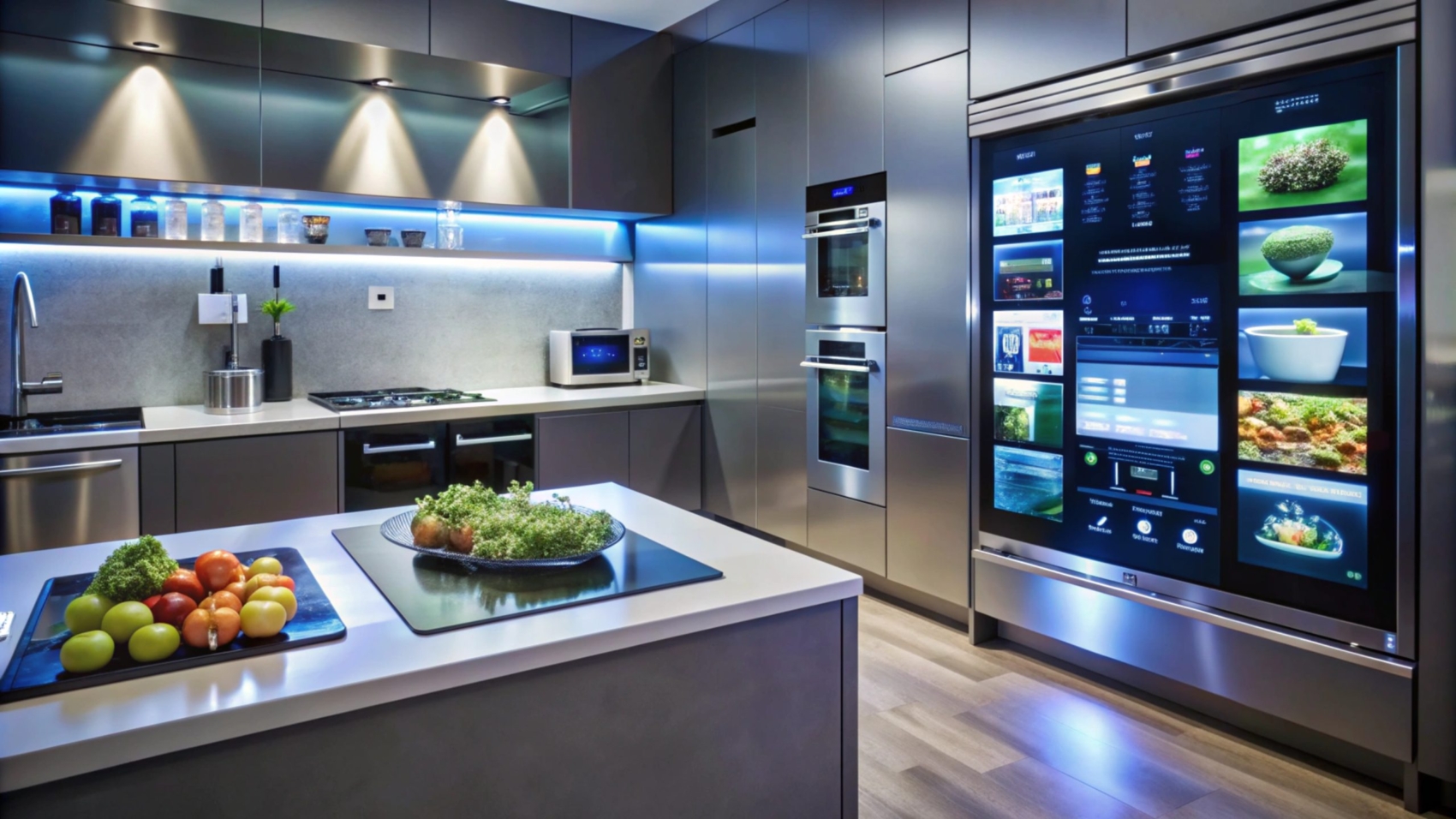
The kitchen is one of the most demanding environments in a home. It combines heat, moisture, electrical equipment, food storage, repetitive tasks, and constant movement within a relatively concentrated space. Modern connected appliances are introducing new ways to coordinate these activities, but their value depends on how effectively technology supports the fundamentals of cooking and maintenance.

Appliances That Communicate Their Condition

Connected ovens, refrigerators, dishwashers, and washing machines can provide operational information that conventional appliances may not display. Users might receive notifications when a cycle finishes, learn that a filter requires attention, or review selected temperature readings remotely.

These features can improve visibility into equipment operation. A refrigerator alert may draw attention to a door left open, while a dishwasher notification can simplify household scheduling.

However, a notification is only useful when it is accurate and actionable. Users should understand which measurements a device actually provides and avoid treating automated diagnostics as definitive technical assessments.

Precision Cooking and Repeatable Results

Digital temperature controls and programmed cooking cycles can make it easier to reproduce familiar results. Some appliances monitor internal conditions and adjust their operation to maintain a selected setting.

Connected interfaces may also store recipes, display operating instructions, or coordinate timers across several tasks. This can be particularly useful when preparing meals that require several stages to finish at the right moment.

Still, technology does not remove the importance of ingredient quality, cookware, food preparation, and practical judgment. Programmed settings should be treated as tools that support cooking rather than substitutes for understanding the process.

The Kitchen as a Coordinated Workspace

Smart lighting can improve visibility over preparation surfaces, while compatible ventilation equipment can respond to selected operating conditions. Voice assistants may provide hands-free timers, and connected appliances can make cycle progress easier to monitor.

A successful layout minimizes unnecessary interaction. Essential controls should remain accessible, interfaces should be easy to understand, and frequently used equipment should not depend on a complicated sequence of application commands.

Heat, steam, grease, and spills also create demanding conditions for electronics. Devices should be installed according to their environmental ratings and manufacturer instructions.

Hygiene, Maintenance, and Product Longevity

Connectivity does not eliminate routine cleaning. Refrigerator seals, dishwasher filters, ventilation components, and appliance interiors still require appropriate maintenance.

Before investing in advanced features, buyers should consider spare-part availability, repair options, software support, and the ability to use basic functions without an internet connection.

An appliance that performs its core task reliably may be more valuable than one with an elaborate interface but limited long-term support.

Technology That Respects the Craft

Cooking involves timing, judgment, creativity, and sensory feedback. The most useful digital tools reduce avoidable distractions, make equipment easier to monitor, and support consistent results without turning meal preparation into a technical exercise.

A well-connected kitchen combines precision with simplicity. Its technology should remain in the background while people concentrate on ingredients, techniques, and the experience of preparing food.

The Hidden Engineering Behind Reliable Smart Devices

A connected device may appear simple from the outside: a compact sensor, a wireless switch, or a small controller mounted discreetly on a wall. Yet reliable operation depends on several engineering disciplines working together, including electronics, communication protocols, firmware, power management, and environmental design.

Understanding these underlying elements helps explain why two products with similar features can perform very differently in everyday use.

Communication Is More Than a Wireless Signal

Smart devices use several communication technologies, each with distinct characteristics. Wi-Fi can provide direct network access and support data-intensive functions, while low-power protocols such as Zigbee and Thread are designed for different forms of connected-device communication.

Bluetooth can be useful for nearby connections and initial configuration. Some systems combine several technologies through a hub or controller.

No protocol is universally superior. The right choice depends on range, power requirements, network architecture, device density, and the functions being supported.

Power Consumption and Battery Life

Small sensors often operate for extended periods on batteries. Their energy requirements depend on how frequently they measure conditions, transmit data, and maintain network connections.

A sensor that reports every few seconds may consume power differently from one that sends updates only when a threshold is crossed. Firmware can therefore have a meaningful effect on operating life.

Battery estimates should be treated as approximate because temperature, signal quality, usage patterns, and battery characteristics can all influence actual performance.

Products should also provide practical ways to identify low battery levels and replace batteries safely.

Firmware and the Software Lifecycle

Firmware determines how a device interprets sensor readings, communicates with other equipment, and executes its functions. Software defects can cause unreliable operation even when the physical components are well designed.

Manufacturers may issue firmware updates to correct faults, improve compatibility, or address security weaknesses. The long-term value of a device therefore depends partly on whether updates remain available and can be installed reliably.

A product’s software support deserves the same consideration as its hardware specifications.

Environmental Conditions and Physical Durability

Smart devices operate in environments that may contain moisture, dust, vibration, temperature fluctuations, or electrical interference. Equipment intended for a dry indoor room may not be appropriate for a bathroom, outdoor location, or utility area.

Enclosure ratings, installation requirements, and operating-temperature limits help determine where a product can be used safely.

Sensors also require calibration and suitable positioning. Even durable equipment can produce misleading results when installed outside its intended operating conditions.

Reliability Is a System Property

A device may work perfectly in isolation but fail when integrated into a larger installation. Communication congestion, incompatible firmware, controller limitations, and poorly designed automation rules can all undermine the complete system.

Testing should therefore include real operating conditions rather than relying exclusively on individual product specifications.

For important functions, it is also worth considering what happens when power or connectivity is interrupted. Local controls, appropriate fail-safe behavior, and clear recovery procedures can reduce disruption.

Engineering That Users Never Need to Notice

The strongest technical design often reveals itself through consistency rather than visible complexity. Devices respond when expected, battery life remains practical, updates are manageable, and integration does not require constant troubleshooting.

Reliable smart home technology depends on much more than adding wireless connectivity to an electronic product. It requires coordinated engineering across hardware, software, communication, and long-term maintenance.

Digital Privacy at Home: The Information Behind Everyday Convenience

Smart home technology creates convenience by observing conditions, exchanging information, and responding to commands. Yet the same processes that make connected devices useful can reveal details about household routines, personal preferences, and daily activity.

Privacy-conscious design begins with understanding what a device collects, why it collects it, where that information goes, and how much control users retain over its use.

Different Devices Reveal Different Information

A temperature sensor may collect environmental readings without identifying individual occupants. A camera can capture visual details, while a voice assistant may process spoken commands. Door sensors and occupancy detectors can generate activity patterns even when they do not record images or conversations.

The sensitivity of the information depends on the device, its location, the frequency of collection, and how the data is combined with other records.

A seemingly harmless collection of events may reveal more than expected when analyzed over time. This makes data minimization an important principle: devices should collect only what is reasonably necessary for their intended functions.

Local Processing and External Services

Some smart home systems process commands and store information on local equipment. Others transmit data to external servers for voice recognition, remote access, analytics, or software features.

Local processing can reduce dependence on external services and may improve responsiveness, but it does not automatically guarantee privacy. The security of local devices, backups, account access, and network configuration still matters.

Cloud services may provide valuable functionality, so the decision is not simply a choice between safe and unsafe technologies. The important considerations include transparency, retention practices, access controls, and the ability to disable unnecessary data collection.

Permissions Should Reflect Real Needs

A connected appliance may request access to location information, contacts, microphones, or other phone functions. Some permissions may be necessary for a particular feature, while others may be optional.

Reviewing these permissions during installation can prevent unnecessary access. It is also useful to examine connected-service integrations, shared accounts, and household access settings periodically.

When a device is no longer used, removing its account connection and resetting it according to the manufacturer’s instructions can reduce lingering access.

Designing Private Spaces

Device placement is a practical privacy decision. Cameras should not be positioned where they capture private activities unnecessarily, and microphones should be placed with awareness of who may be recorded.

Physical shutters, microphone mute controls, recording indicators, and clearly defined access permissions can make device behavior easier to understand.

Household members and visitors should also be able to recognize when monitoring equipment is present and understand its purpose.

A More Transparent Connected Home

Privacy settings are most effective when they are understandable and easy to change. Long policy documents alone are not enough if the actual controls are hidden or confusing.

Before purchasing a connected device, users can review its update policy, data storage options, account requirements, and available deletion controls. Products that explain these functions clearly are easier to evaluate.

Digital privacy does not require abandoning connected technology. It requires making informed decisions about the boundaries between convenience and observation. A well-designed smart home should provide useful assistance without collecting more personal information than its functions genuinely require.